Gymnastic rings are great tools. You can get strong using them. But you must hang them the right way. Hanging them wrong is dangerous. This guide tells you how to hang gymnastic rings correctly and safely. It talks about how to set up ring straps, where to hang them like beams or pull up bars, and how to make them high or low. We will look at different places to hang them, like ceilings and tree branches. We will also talk about how to use things like carabiners if your setup needs them. Learning how to hang rings safely is the first step to training well.
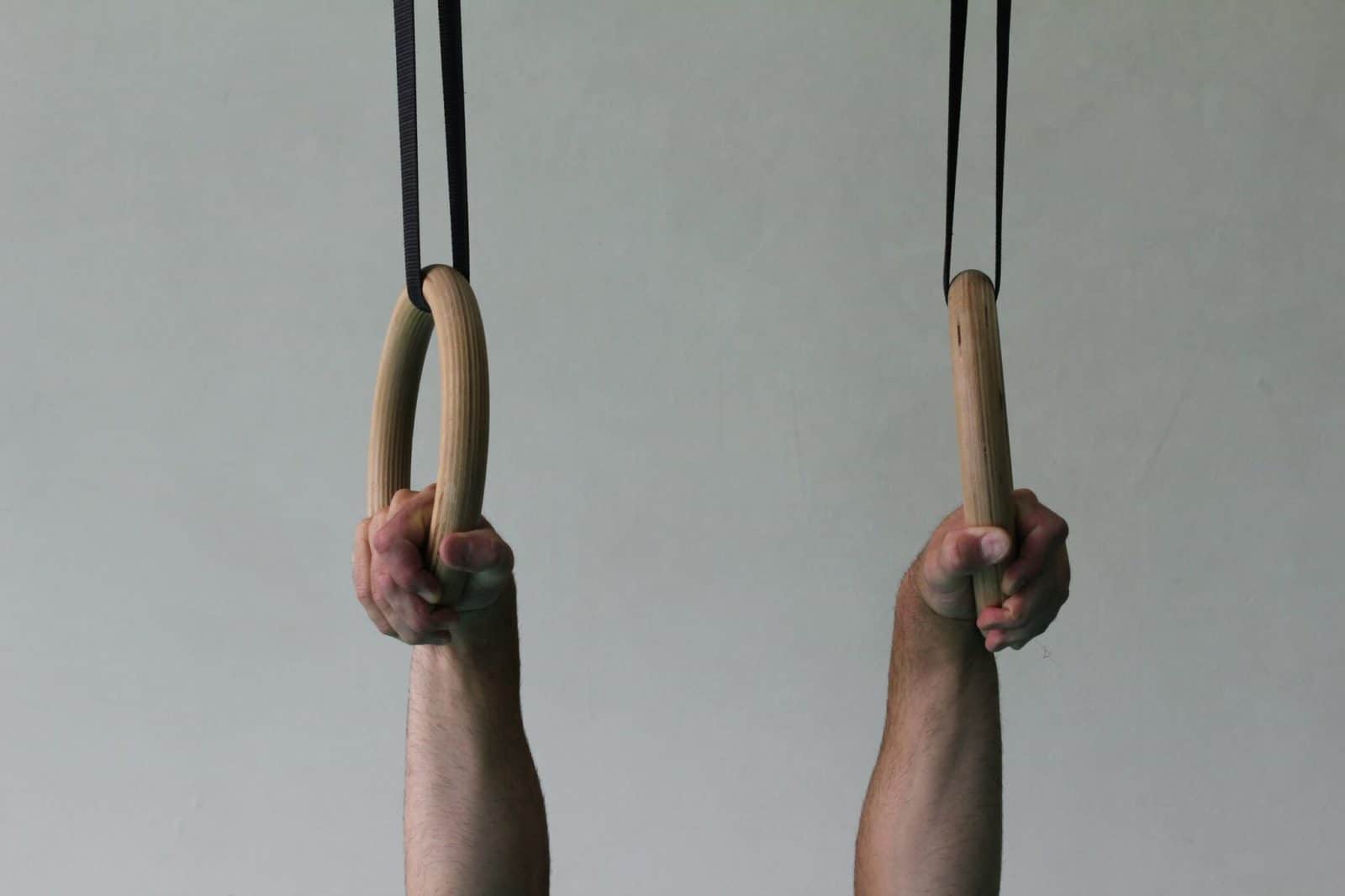
Image Source: gmb.io
Why Use Gymnastic Rings?
Rings help you build real strength. They move freely. This makes your body work harder. You use many muscles at once. This helps you get strong and stable.
Rings are good for many exercises.
* Pull-ups
* Dips
* Push-ups
* Rows
* Muscle-ups
But rings must be safe. They need to hold your weight. They need to be hung the right way.
Important Things to Know First
Before you hang your rings, think about a few things.
* How much do you weigh?
* How strong is the place you want to hang them?
* What are your rings and straps made of?
* Where will you do your exercises?
The place where you hang the rings is called the anchor point for rings. This spot must be very strong. It needs to hold you plus extra force. When you swing or move fast, you put more force on the anchor point. It needs to hold many times your weight.
Your rings and straps also need to be strong. Most ring sets come with strong straps and buckles. They are made for exercise. Check the weight limit on your rings and straps. Make sure they can hold you safely.
Where Can You Hang Rings?
You can hang rings in many places.
* Inside your house
* Outside in your yard
* At the gym
Each place has different things to hang from.
Hanging from a Beam
Beams are often very strong. You can hang rings from wood beams or metal beams.
* Wood Beams: Look for large, solid wood beams. They are often in garages, basements, or attics. Make sure the beam is not old or damaged.
* Metal Beams: These are usually very strong. You might find them in some modern homes or gyms.
Hanging rings from beam needs a good spot on the beam. Pick a spot that is easy to reach. Make sure there is enough space around it. You need room to move freely. Your body should not hit walls or other things.
To hang from a beam, you usually loop the ring strap over the beam. The strap goes around the beam. Then you feed the strap through the buckle. Pull it tight. Make sure the strap lies flat on the beam. It should not be twisted.
Hanging from a Pull Up Bar
This is a common way to hang rings. You can use a pull up bar in a doorway. Or a wall-mounted pull up bar. Or a free-standing pull up bar cage.
The pull up bar itself must be strong. Doorway bars must be put in right. Wall-mounted bars need to be put into wall studs. Free-standing bars need to be stable.
Setting up rings on a pull up bar is easy.
1. Hold one ring and strap.
2. Throw or feed the strap over the pull up bar.
3. Pull the strap down on the other side.
4. Feed the end of the strap through the buckle.
5. Pull it tight to make a loop around the bar.
6. Do the same for the other ring.
Make sure the straps are spaced right. They should be about shoulder width apart. This feels best for most exercises. The pull up bar rings setup is quick and simple.
Hanging from the Ceiling
Hanging rings from the ceiling can work. But you must be very careful. You need to find strong wood beams in the ceiling. These are called joists.
You cannot just screw into drywall or plaster. It will not hold your weight. You must find the ceiling joists. Use a stud finder to find them.
You need special hardware for ceiling mount rings.
* Strong metal hooks or loops
* Long, strong screws called lag screws
Steps for ceiling mount rings:
1. Find two strong joists in the ceiling. They should be about shoulder width apart.
2. Mark the spot on the joists.
3. Drill a pilot hole. This is a small hole that helps the screw go in.
4. Screw the metal hook or loop into the joist. Make sure it goes deep into the wood.
5. Do this for both spots.
6. Attach your ring straps to the hooks or loops. You might need a carabiner ring attachment here. The carabiner connects the ring strap loop to the ceiling hook.
This type of gymnastic rings installation needs skill. If you are not sure, ask someone who knows about building. A wrong ceiling mount is very dangerous. It can fall and hurt you badly.
Hanging from a Tree Branch
You can hang rings outside on a strong tree branch. This can be fun. But you must pick the right branch.
The branch must be:
* Very thick and strong. It needs to hold much more than your weight.
* Healthy. No cracks or signs of rot.
* High enough off the ground. You need room to hang and move.
* Easy to reach safely to put up the rings.
Using tree branch rings means looping the strap over the branch. Like with a beam, feed the strap end through the buckle. Pull it tight.
Protect the tree and the strap. Over time, the strap rubbing can hurt the tree bark. The branch rubbing can hurt the strap. You can use a piece of old carpet or cloth between the strap and the branch. This protects both.
Make sure the branch goes straight out. A branch that points up or down too much might not be as strong. Also, check the ground below. Make sure it is clear and soft if possible.
Other Anchor Points
You can hang rings from other strong things too.
* Pergolas
* Outdoor playsets
* Rafters in a garage
* Gym frames
Always check how strong the structure is first. Make sure it can hold your weight safely.
How to Set Up Ring Straps
Your ring suspension system uses straps. These straps are strong. They have numbers or marks on them. This helps you make both rings the same height.
Most straps have a buckle. It is often a cam buckle. This buckle lets you pull the strap tight. It holds the strap in place. It also lets you make the strap longer or shorter.
Steps for ring straps setup:
1. Take one strap.
2. Find your anchor point for rings (beam, bar, branch, hook).
3. Loop the strap over or through the anchor point.
4. Bring the end of the strap down.
5. Open the cam buckle. There is usually a lever. Push it open.
6. Feed the strap end through the buckle. Look for an arrow or picture on the buckle. It shows which way the strap goes.
7. Pull the strap through the buckle to make a loop. The ring hangs from this loop.
8. Do not put the ring on yet. Just make the loop.
9. Do the same for the second strap on the other side of your anchor point.
10. Now, attach the rings. The ring goes onto the bottom loop you made with the strap. Some straps have a small loop already made at the end for the ring. Or you thread the strap through the ring and back into the buckle. Check your ring set’s instructions.
Make sure the straps are hanging straight down. They should not be twisted.
Adjusting Ring Height
One great thing about rings is you can change their height easily. This is called adjusting ring height. Different heights are good for different exercises.
- Rings high up: Good for pull-ups, muscle-ups, rows.
- Rings low down (near the floor): Good for push-ups, dips, L-sits.
To make the rings higher:
1. Hold the strap near the buckle.
2. Open the buckle (push the lever).
3. Pull the strap up through the buckle. This makes the bottom loop shorter.
4. Do this for both rings.
5. Make sure both rings are at the same height. Look at the numbers or marks on the strap. Or stand back and look.
To make the rings lower:
1. Hold the strap below the buckle.
2. Open the buckle.
3. Pull the strap down through the buckle. This makes the bottom loop longer. The ring goes down.
4. Do this for both rings.
5. Check that both rings are at the same height using the marks or by looking.
Always close the buckle tightly after adjusting. Give the strap a little tug down to make sure it is locked.
A table for common heights:
| Exercise Type | Ring Height Suggestion |
|---|---|
| Pull-ups, Muscle-ups | High, so your feet don’t touch the ground. |
| Rows | Medium, rings about waist to chest high. |
| Dips, Push-ups | Low, rings near the floor. |
| L-sits | Low, rings about knee height or lower. |
These are just ideas. You can change the height to fit your body and the exercise.
Checking Your Setup is Safe
After setting up your gymnastic rings installation, you must check it. This is very important.
- Check the anchor point: Did you hang them from something strong? A solid beam? A strong bar? A healthy tree branch? A properly installed ceiling mount rings hook? Make sure it looks stable.
- Check the straps: Are they looped correctly over the anchor point? Are they flat, not twisted? Is the strap end fed through the buckle the right way?
- Check the buckles: Are they closed and locked? Pull on the strap below the buckle. It should not slip.
- Check the rings: Are they attached correctly to the strap loop?
- Check the height: Are both rings at the same height? Use the marks on the straps.
- Check the space: Is there enough room around you? Will you hit anything?
Test the Setup Gently
Before you put your full weight on the rings, test them.
1. Hold onto both rings.
2. Put a little bit of your weight on them. Do not hang fully yet.
3. Wiggle the rings and straps a little. Look at the anchor point. Does anything move or look shaky?
4. If it looks good, hang with your feet still on the ground. Take more of your weight.
5. If that is good, hang fully. Just hang for a few seconds. Listen for strange noises. Look at the straps and anchor point again.
6. If everything feels solid, you can start your workout.
Always test your setup each time you hang the rings, especially if you move them or change the height a lot.
Types of Rings and Straps
You can buy different types of rings.
* Wood rings: These feel good in your hands. They give good grip. They are often used in gyms.
* Plastic rings: These are strong and good for outside. Rain does not hurt them. They might not grip as well as wood when hands are sweaty.
Ring straps are usually nylon or polyester. They are very strong. They come in different lengths. Long straps are good if you need to hang them high. They let the rings go low too.
The buckle type is important for easy adjusting ring height. Cam buckles are common. They are fast to use. Make sure the buckle is made of strong metal.
Sometimes, people use extra parts. A carabiner ring attachment can be used to connect the strap to a hook or chain. Make sure the carabiner is a strong climbing-grade one, not a cheap key chain one. A weak carabiner can break. However, most ring suspension system setups just loop the strap directly over the anchor point. Carabiners are not always needed.
Step-by-Step Gymnastic Rings Installation Guides
Let’s look closer at how to install rings in common places.
Installing on a Wood Beam
You need: Rings, straps, the beam.
1. Find a strong wood beam. It should be thick and look solid.
2. Choose a spot on the beam. Make sure it is high enough and has space around it. Mark two spots on the bottom of the beam, about shoulder width apart.
3. Take one strap. Throw the end of the strap over the beam at one marked spot. Or climb safely to reach the top of the beam and put the strap over.
4. Let both ends of the strap hang down.
5. Feed the end without the ring through the cam buckle.
6. Pull the strap end to form a loop around the beam. This loop should be snug against the bottom of the beam.
7. Make sure the strap is flat and not twisted around the beam.
8. Close the buckle.
9. Repeat for the second strap and ring on the other marked spot.
10. Make sure both straps hang down straight.
11. Check that the rings are at the same height. Use the marks on the straps.
12. Test the setup slowly and carefully before full use.
This hanging rings from beam method is simple and strong if the beam is good.
Installing on a Pull Up Bar
You need: Rings, straps, a pull up bar.
1. Make sure your pull up bar is installed safely and is stable.
2. Take one strap and ring.
3. Throw the strap end over the pull up bar.
4. Let the strap hang down on both sides of the bar.
5. Feed the strap end (the one without the ring) through the cam buckle attached to the ring.
6. Pull the strap end to make a loop around the bar.
7. Pull the strap tight so the loop is snug against the bar.
8. Do this for the second strap and ring. Place the strap loop about shoulder width away from the first one on the bar.
9. Make sure both straps are flat and not twisted.
10. Adjust ring height so they are even.
11. Test the setup.
This pull up bar rings setup is very common for indoor use.
Installing Using a Ceiling Mount
You need: Rings, straps, ceiling hooks/loops, lag screws, drill, stud finder. Maybe a carabiner ring attachment.
1. Use the stud finder to find strong ceiling joists. Joists are wooden beams inside the ceiling. They run in one direction.
2. Find two joists that are about shoulder width apart where you want to hang the rings. Or find one strong joist and use a special mount that goes across it. (Check product instructions).
3. Mark the spot on the ceiling for each hook.
4. Check above the ceiling if you can (attic) to be extra sure there’s a joist there and nothing in the way (pipes, wires). This is best.
5. Drill a pilot hole at each mark. The size depends on your lag screws.
6. Screw the strong metal hooks or loops into the pilot holes. Use a wrench or drill to make them tight. They must go deep into the joist.
7. Attach your ring straps to these ceiling hooks. You can loop the strap through the hook. Or use a strong carabiner ring attachment to link the strap loop to the hook.
8. Make sure both rings are at the same height.
9. Test the setup very carefully. Start with just hanging. Add weight slowly. Watch the hooks and ceiling. If anything looks wrong, stop.
This ceiling mount rings method needs careful planning and work. Do it right or get help. It is a main part of ceiling gymnastic rings installation.
Installing on a Tree Branch
You need: Rings, straps, a strong, healthy tree branch. Maybe old carpet/cloth.
1. Find a thick, strong branch that goes out mostly straight. Check it for cracks or rot. Make sure it is high enough and has clear space below.
2. Safely get the strap over the branch. You can throw it, use a stick, or climb carefully.
3. Let the strap hang down.
4. If using protection, put a piece of old carpet or thick cloth over the branch where the strap will sit.
5. Loop the strap over the branch and the protective material.
6. Feed the strap end through the cam buckle.
7. Pull it tight to make a loop around the branch.
8. Repeat for the second strap, placing it about shoulder width from the first.
9. Make sure straps are flat and not twisted.
10. Adjust rings to the same height.
11. Test the tree branch rings setup gently.
Outdoor tree branch rings can be great, but safety first with the branch.
Caring for Your Rings and Straps
Good care makes your rings and straps last longer. It also keeps them safe.
* Wood rings: Do not leave them outside. Rain and sun can hurt the wood. If they get wet, dry them well. You can sand them if they get rough.
* Plastic rings: You can leave them outside. But keeping them out of the sun when not using might make them last longer.
* Straps: Keep them clean. If they get dirty, wash them by hand with mild soap and water. Let them dry fully. Check them often for cuts or fraying. If a strap is damaged, do not use it. Replace the whole set.
* Buckles: Make sure they are clean and work smoothly. If a buckle is bent or broken, do not use it.
Your entire ring suspension system needs care. Check all parts often.
Troubleshooting Common Problems
- Rings are uneven: This is common. Use the marks on your straps. Adjust one ring at a time until the marks match. Then look from a distance to double check.
- Strap is slipping in the buckle: The buckle might be faulty. Or the strap is not fed through correctly. Check your buckle’s instructions. If it still slips, stop using it and get a new strap or set. A slipping strap is very dangerous.
- Anchor point feels wobbly: Stop using the rings immediately. Your anchor point for rings is not strong enough or the attachment is bad. Find a new place or fix the current one correctly. Do not train on a wobbly setup.
- Straps are twisted: Take the rings down and re-hang them. Make sure the strap hangs straight before looping it over or through the anchor.
- Straps are too short/long: Check the length of your straps when buying. Standard straps are good for most uses. If you need very high hangs, you need longer straps.
Comprehending Strap Length
Strap length matters. If you hang your rings very high up (like from a 10-foot ceiling or high beam), you need straps long enough to reach the floor. This lets you do exercises like push-ups.
Standard straps are often 15 feet long. This is enough for many setups. But if you have a very high anchor point, measure from the anchor to the floor. Make sure your straps are at least this length. Longer is better so you have room to adjust.
Grasping the Importance of Space
You need space to use rings safely.
* Above you: Enough room for your body when hanging or doing pull-ups.
* Below you: Clear space. No hard objects you could fall on.
* Around you: Enough space to swing a little or move without hitting walls or furniture.
Think about the exercises you want to do. Muscle-ups need more height than push-ups. Swings need more side space than dips. Pick an anchor point for rings that gives you enough room for your goals.
FAQs (Frequently Asked Questions)
h4: How far apart should I hang my rings?
Hang them about shoulder width apart. This feels natural for most people for most exercises. You can change it a little to see what feels best for you.
h4: Can I hang rings outside permanently?
Wood rings should not stay outside all the time. Plastic rings can handle weather better. But sun, rain, and cold can still wear down the straps and buckles over time. It is best to take them down when not using them, especially in bad weather.
h4: My straps have numbers. What are they for?
The numbers or marks help you set both rings to the exact same height. Line up the number on the strap with the bottom of the buckle on both sides.
h4: How much weight can gymnastic rings hold?
Good quality rings and straps can often hold 600-800 pounds or more. But the anchor point is usually the weak spot. Always check the weight limit of the rings and straps, and make sure your anchor point is much, much stronger.
h4: Do I need gloves to use rings?
Most people do not use gloves. Your hands might get tough spots called calluses. This is normal. Some people use chalk for better grip, especially on wood rings or when hands are sweaty.
h4: Can I hang rings from a tree branch that is not perfectly straight?
It is best to pick a branch that is mostly straight and grows outwards. Branches that grow sharply up or down might not be as strong in that direction. Also, check that the strap will sit flat and not rub against sharp parts of the bark.
h4: My ceiling has metal beams. Can I hang rings from them?
Yes, if you use the right hardware. Special clamps or mounts can go around metal beams. Do not drill into metal beams unless you know what you are doing and have the right tools and mounts made for metal.
Summary of Safe Hanging
Hanging gymnastic rings correctly means:
* Picking a very strong anchor point for rings.
* Using good quality rings and a strong ring suspension system (straps and buckles).
* Setting up the ring straps correctly, making sure they are not twisted and the buckles are locked.
* Adjusting ring height so both rings are even.
* Testing your setup gently before full use.
* Checking your rings and straps often for wear or damage.
Gymnastic rings installation is not hard, but it needs care. Always put safety first. A good setup lets you train hard and reach your fitness goals. Have fun using your rings!