Image Source: www.dlgsc.wa.gov.au
Discover the Official Competition Size: how big is gymnastics floor
So, how big is a gymnastics floor? The official size for a competitive gymnastics floor, like the one used in the Olympics and other major events, is a perfect square that measures 12 meters long by 12 meters wide. This is the standard floor exercise area where gymnasts perform their routines.
Getting the Right Size
When you watch gymnastics, the floor looks like a large, square stage. This area has very specific gymnastics floor dimensions set by the rules. The main part where the gymnasts tumble, leap, and dance is exactly 12 meters on each side.
Think of it like a box drawn on the floor. The edges of this box are the floor exercise boundaries. These lines are important because gymnasts get a penalty if they step or land outside them during their routine.
- Length: 12 meters
- Width: 12 meters
- Shape: A square
To give you an idea in feet and inches, 12 meters is about 39 feet and 4.5 inches. So, the competitive floor is roughly 39 feet by 39 feet. This standard floor exercise area is used all around the world for serious competitions. Knowing the gymnastics floor area measurements helps us understand the space gymnasts have to work with.
What 12 Meters by 12 Meters Means
This specific size isn’t just a random number. It’s chosen to give gymnasts enough space to perform powerful tumbling passes that go from one side to the other or corner to corner. A gymnast might run diagonally across the floor for a long tumbling line. The 12×12 meter size gives them the room they need for their run-up, the skills themselves, and a safe landing.
It also gives them space for the other parts of their routine, like dance moves, turns, and leaps, moving between different areas of the floor. The standard floor exercise area must be this exact size according to the rules.
Seeing the Boundaries
The edges of the 12×12 meter area are marked very clearly. Usually, there is a white line or a change in color or material that shows the floor exercise boundaries. These lines are important guides for the gymnasts and the judges. Staying inside these lines is part of performing a good routine. Stepping out means the judges will take points off the gymnast’s score.
The boundaries help make sure every routine is performed in the same size area, making the competition fair for everyone. These lines define the competitive gymnastics floor size used for scoring.
Safety Around the Edges
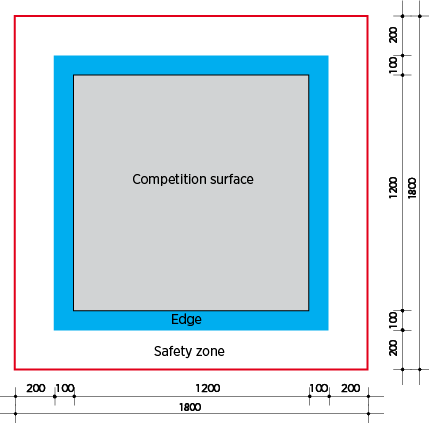
The 12-meter by 12-meter square is the performance area. But the floor setup is actually bigger than just that square. Around the official competitive gymnastics floor size, there is a safety zone.
This safety zone is extra space outside the boundaries. It must be at least 1 meter wide on all sides of the 12×12 meter square. This means the total flat area needed for the floor and its safety zone is at least 14 meters by 14 meters (12 meters for the floor + 1 meter on each of the two sides = 14 meters).
- Competition Area: 12m x 12m
- Safety Zone: Minimum 1m wide on all sides
- Total Space Needed: Minimum 14m x 14m
The safety zone is important to prevent injuries. If a gymnast finishes a tumbling pass close to the edge or if they fall, they land on a safe surface instead of the hard floor of the arena. This safety zone must also be level with the competition floor and have a similar surface.
This requirement is part of the FIG gymnastics floor regulations, making sure the equipment is safe for athletes competing at the highest levels. The safety zone rules are as important as the floor exercise size rules themselves.
More Than Just a Mat
When you look at a gymnastics floor, it might seem like a large mat. But it’s much more complex than that. The competitive gymnastics floor isn’t just a piece of carpet; it’s a specially built system designed to be springy and absorb impact. This system makes the floor unique and different from just any large mat. It includes multiple layers beneath the top surface. This is where the “gymnastics floor mat dimensions” idea comes in, but it’s about the system‘s dimensions.
Pieces Making the Floor
A competitive gymnastics floor is put together from many different parts. It’s not one giant piece. Instead, it’s built using sections that fit together. These sections usually sit on a base, then have layers that provide the spring and cushioning, and finally the top carpet layer where the gymnast performs.
Here’s a simple look at the layers:
- Base Layer: This is usually made of wood platforms or panels that sit directly on the arena floor.
- Spring System: This is the most important layer for the floor’s unique feel. It can be made of many small springs or foam blocks that bounce back when stepped on.
- Foam Layer: A layer of foam sits on top of the springs. This adds cushioning and helps spread the impact evenly.
- Top Surface: This is the carpeted layer that the gymnasts actually perform on. It’s usually a durable, soft carpet.
All these parts together make the official competitive gymnastics floor. The total size of this entire built system, including the springs and base, matches the 12m x 12m competition area with the added safety zone around it. The size of the individual “gymnastics floor mat dimensions” that make up the surface would be smaller pieces that join together to form the 12×12 square.
How the Bounce Works
The spring system underneath the carpet is what gives the gymnastics floor its famous bounce. Tumblers need this bounce to get height for complex flips and twists. Leapers also use the floor to help push off the ground. The springs or foam cubes absorb the energy when the gymnast lands and then push back, helping them jump high for the next skill.
This springiness is a key part of floor exercise. It allows gymnasts to perform skills that would be impossible on a hard floor. The way these systems are built and arranged underneath affects the feel and bounce of the competitive gymnastics floor size.
Springy Layers
Let’s look a bit closer at the layers:
* Wood Panels: These are often 4×8 foot or similar sized pieces that lock together to form the base of the 12×12 meter area and the safety zone.
* Springs or Blocks: Thousands of small, strong springs or specially designed foam blocks are placed on top of the wood base, spread out evenly. These provide the spring.
* Underlayment: A dense foam layer or sometimes several layers of foam go on top of the springs. This layer helps control the bounce and makes the surface feel more consistent.
* Carpet: The final layer is a special type of carpet, usually glued or fastened down tightly across the entire 12×12 area and the safety zone. It provides a non-slip surface.
The total structure, including all these layers, fits within the required gymnastics floor dimensions.
Following the Official Rules
The size and construction of a competitive gymnastics floor are not decided by chance. They are strictly controlled by international rules. These are known as the FIG gymnastics floor regulations. FIG stands for the Fédération Internationale de Gymnastique, which is the main group that governs gymnastics around the world.
Who Makes the Rules?
The FIG writes the Code of Points, which is the rulebook for judging and competition in gymnastics. This book includes detailed rules about all the equipment used, including the floor exercise size rules. These rules make sure that every competition, from small international meets to the Olympic Games, uses the exact same standard equipment. This makes the competition fair for all athletes, no matter where they are competing.
What the Rules Say About Size
The FIG rules clearly state the required gymnastics floor dimensions: a 12m x 12m performance area. They also specify the minimum size for the surrounding safety zone, which is 1 meter wide on all sides. The rules also cover things like the tension of the springs, the evenness of the surface, and the markings for the floor exercise boundaries.
The floor should be essentially level with the ground around it, with no significant height difference that could be a tripping hazard. The focus is on the performance space (the 12×12 square) but the regulations cover the entire setup needed for competition.
Checking the Measurements
Before a big competition, officials check that all the equipment meets the FIG gymnastics floor regulations. This includes measuring the competitive gymnastics floor size to make sure it’s exactly 12 meters by 12 meters and that the safety zone is the right size. They also check the floor’s bounce and feel to make sure it’s consistent. This ensures that the field of play is fair for every athlete. These checks are a standard part of preparing for events governed by FIG floor exercise size rules.
Olympic Size? It’s Standard
Many people ask about the “Olympic gymnastics floor size.” The answer is simple: the floor used in the Olympic Games is the standard competitive size. It is the same 12 meters by 12 meters floor required by the FIG for all major international competitions, including the World Championships.
There isn’t a special, larger, or smaller floor just for the Olympics. The Olympic gymnastics floor size is simply the application of the standard FIG rules at the highest level of the sport. So, the dimensions you see at the Games are the same as those used in many other elite gymnastics events.
Where Athletes Compete
Major events like the Olympics, World Championships, and World Cups all use floors that meet the strict FIG gymnastics floor regulations. This ensures that athletes are competing on familiar and consistent equipment, no matter the location of the event. The 12m x 12m competitive gymnastics floor size is the stage for the world’s best gymnasts to show their skills.
Why 12 by 12 Works
You might wonder why 12 meters by 12 meters was chosen as the standard floor exercise area size. It’s a size that has been found to be the best fit for the types of skills and routines performed in gymnastics today.
Enough Room to Tumble
Modern gymnastics includes very complex and long tumbling passes. A gymnast might do a series of flips and twists that cover a lot of ground. The 12-meter length allows them to run up, perform several acrobatic elements one after another, and have space to land safely within the floor exercise boundaries. Shorter floors would limit the difficulty of the passes gymnasts could perform. The gymnastics floor area measurements are just right for this.
Keeping Routines Flowing
Floor exercise routines are not just tumbling. They also include dance, leaps, turns, and holds, all performed to music. The 12×12 meter square provides enough space for gymnasts to move gracefully across the floor, transition between different types of skills, and use the entire area for their choreography. They can move from corner to corner, along the diagonals, and use the center. The standard floor exercise area allows for creative and dynamic routines.
Safety and Performance Balance
The size balances the need for enough space for difficult skills with the need to stay within the bounds. It challenges gymnasts to control their power and movements precisely within the defined competitive gymnastics floor size. It’s a balance between allowing high difficulty and requiring control. The size is large enough for amazing feats but small enough that staying within the floor exercise boundaries is a skill in itself.
Acrobatic Floor
While this article focuses mainly on the floor used in Artistic Gymnastics (what most people think of with tumbling and individual routines), it’s worth mentioning Acrobatic Gymnastics briefly because of the “Acrobatic gymnastics floor dimensions” keyword.
Interestingly, Acrobatic Gymnastics also uses a 12 meters by 12 meters competition floor. So, the basic size is the same as in Artistic Gymnastics. However, the routines are very different. Acrobatic gymnastics involves partnerships (pairs, trios, fours) performing balances, dynamic moves (like throws and catches), and tumbling, often with members of the group supporting or throwing each other.
Even though the Acrobatic gymnastics floor dimensions are the same square, the way the space is used and the demands on the floor system (especially for impact absorption from catches and landings) are unique to the sport. The safety zone requirements are also similar.
So, when talking about “Acrobatic gymnastics floor dimensions,” you’re still talking about the 12m x 12m square, but the context of its use changes.
Putting it All Together
Seeing the competitive gymnastics floor size in action during a routine highlights why the dimensions are so important. Gymnasts use every inch of that 12×12 meter square. They plan their passes to start and end near the edges, using the full length of the floor. Their dance and turns fill the space, moving from the center to the corners and back.
The floor exercise boundaries are constantly in their mind as they perform, especially during powerful tumbling. Staying within the lines is part of showing control and precision. The size of the standard floor exercise area directly influences the composition and difficulty of the routines we see.
The gymnastics floor area measurements aren’t just numbers; they are the framework for incredible athletic performances.
Keeping the Floor Ready
Keeping a competitive gymnastics floor in top condition is very important. Regular maintenance is needed to make sure the floor stays safe and performs correctly. This includes checking the tension of the springs, making sure the panels fit together tightly, and keeping the carpet clean and in good shape.
Damage to the floor system could affect the bounce and feel, making it uneven or unsafe. Proper care ensures the floor meets the FIG gymnastics floor regulations and floor exercise size rules for every practice and competition.
Numbers in One Place
Here is a quick look at the main numbers for a competitive gymnastics floor:
| Area | Size (Meters) | Approximate Size (Feet/Inches) | Purpose |
|---|---|---|---|
| Competition Surface | 12m x 12m | ~39 feet 4.5 inches x 39 feet 4.5 inches | Where the routine is performed |
| Safety Zone (each side) | Minimum 1m wide | Minimum ~3 feet 3 inches wide | Safe area around the boundary |
| Total Flat Area Needed | Minimum 14m x 14m | Minimum ~46 feet x 46 feet | Total space for floor structure |
| Height | Very low, close to ground level | Very low, close to ground level | Not raised like a platform |
These gymnastics floor dimensions and the safety zone requirements are standard for high-level competition. The gymnastics floor area measurements are key to setting up an official venue.
More About the Floor
The competitive gymnastics floor size of 12 meters by 12 meters is a critical part of the sport. It’s a size that allows gymnasts to perform incredible feats of strength, flexibility, and artistry. The rules set by the FIG about the floor exercise boundaries and the overall dimensions ensure fairness and safety across all competitions.
From the base layers and the thousands of springs to the final carpeted surface, every part of the floor is designed to provide the perfect balance of support and bounce needed for world-class gymnastics. The standard floor exercise area provides the consistent stage needed for athletes to chase their dreams.
Common Questions About the Floor
Here are some questions people often ask about the gymnastics floor size and setup:
Is the floor hard like wood?
No, the competitive gymnastics floor is not hard. It is built with layers of wood panels, springs (or foam blocks), and foam padding underneath the carpet. This construction makes the floor very springy and cushioned, which is needed for tumbling and jumps. It feels firm underfoot but gives a lot of bounce.
Why is the floor square?
The 12×12 meter size is a square to give gymnasts equal space in all directions. This allows for routines that move across the floor using diagonals as well as straight lines, providing more options for choreography and tumbling passes. A square shape works best for balancing the tumbling and dance parts of the routine within the floor exercise boundaries.
Are training floors the same size?
In many larger training gyms, the floor area is indeed 12 meters by 12 meters so that gymnasts can practice on the official competitive gymnastics floor size. However, some smaller gyms might have slightly smaller floor areas due to space limitations. But for serious training, especially for gymnasts competing at higher levels, practicing on a standard floor exercise area is important.
What happens if a gymnast steps out of bounds?
If a gymnast steps or lands outside the 12×12 meter floor exercise boundaries during their routine, judges take a deduction from their score. Stepping one foot out is a smaller deduction than landing completely outside the lines. This rule is part of the floor exercise size rules set by the FIG.
Are Men’s and Women’s Artistic Gymnastics floors the same size?
Yes, the competitive gymnastics floor size is the same for both men’s and women’s artistic gymnastics competitions. Both use the 12m x 12m standard floor exercise area.
How long does it take to set up a competition floor?
Setting up a competitive gymnastics floor can take several hours. It involves laying out the base panels, placing the springs or blocks, adding the foam layers, and finally installing and securing the large carpet piece. It’s a careful process to ensure the floor is put together correctly and safely meets all the gymnastics floor dimensions and FIG regulations.