Image Source: media-cldnry.s-nbcnews.com
Why Do Gymnasts Run With Straight Arms Explained
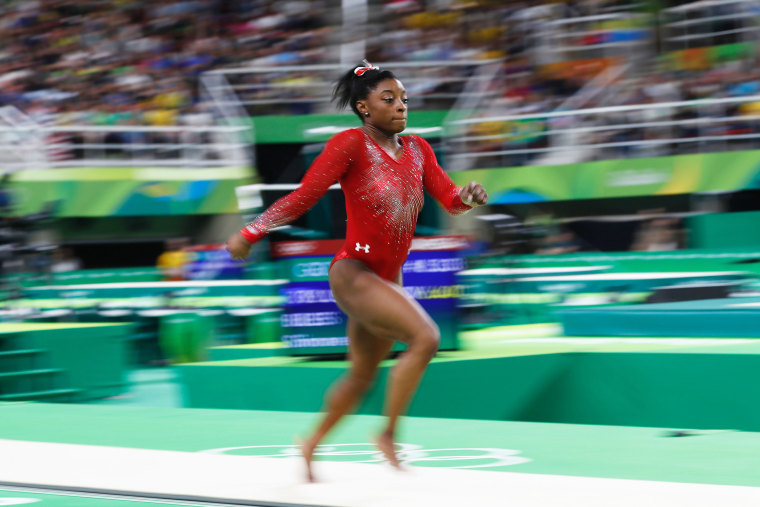
Gymnasts run with straight arms primarily to maximize locomotion efficiency and enhance momentum generation during their powerful approaches. This distinct running form is not just an aesthetic choice but a carefully developed technique rooted in biomechanics and the specific demands of gymnastics.
The Biomechanics of a Straight-Arm Run
The characteristic straight-arm running style seen in gymnastics is a specialized adaptation. Unlike conventional running where arms often swing in a bent, reciprocal motion to counter-balance leg movement and propel the body forward, gymnasts adopt a different strategy. This deviation is deliberate and serves several critical functions, all aimed at optimizing performance for explosive takeoffs and complex aerial maneuvers.
Arm Swing Mechanics: A Different Purpose
In general athletic endeavors, the arms act as crucial counterweights and sources of power. A typical running arm swing involves bending the elbow to approximately 90 degrees, with the arms swinging forward and backward in opposition to the legs. This helps maintain balance, reduce the rotational forces on the torso, and contribute to forward propulsion. However, for a gymnast preparing for a vault or a tumbling pass, the objective shifts.
Instead of a pronounced swing, gymnasts often keep their arms relatively straight, moving them with less amplitude and more control. This isn’t about passive stillness; rather, it’s about a specific type of arm swing mechanics that serves a different purpose. The focus shifts from a free-flowing swing to a more directed, controlled movement that aids in body alignment and prepares the body for its next action.
Locomotion Efficiency: Reaching for Power
Locomotion efficiency is paramount in gymnastics. Every ounce of energy needs to be channeled effectively into generating speed and power. The straight-arm run contributes to this efficiency by minimizing energy expenditure on extraneous movements. When a gymnast runs with straight arms, they are not wasting energy on the large, reciprocal swings that characterize distance running. Instead, their energy is conserved for the explosive push-off.
This efficient use of energy directly translates into greater speed and momentum carried into the takeoff. Think of it like a coiled spring; the straighter the spring, the more potential energy it holds. Similarly, by keeping their arms more aligned with their body, gymnasts are preparing to transfer maximum force.
Momentum Generation: Building for the Flip
The core reason for the straight-arm run is momentum generation. Gymnasts need to build significant forward momentum to execute powerful tumbling passes and vaults. This momentum is crucial for achieving the height and rotation necessary for complex skills.
When a gymnast runs with straight arms, they are essentially setting themselves up for a powerful, upward thrust. The arms, held in a more extended position, can be used to drive powerfully into the ground during the final steps and the takeoff itself. This action amplifies the force generated by the legs, directly contributing to increased vertical momentum.
The Role of Upward Drive
The straight arms, during the final strides and the takeoff, are often driven upwards with significant force. This upward drive, combined with the forward momentum from the run, creates a powerful trajectory for the gymnast. It’s a coordinated effort where the entire body works in unison to launch the athlete into the air.
This upward drive is particularly evident in the approach to the vault. The gymnast sprints with a controlled, powerful stride, keeping their arms relatively extended. As they reach the springboard, their arms are driven upwards with immense force, contributing significantly to the overall lift they achieve.
Postural Control: Staying Grounded and Aligned
Maintaining impeccable postural control is fundamental in gymnastics. Every movement must be precise and controlled. The straight-arm run aids in this by promoting a more stable and streamlined body posture.
When arms are kept straighter and closer to the body, it can help to create a more rigid core and reduce unwanted torso rotation. This enhanced stability allows the gymnast to maintain a powerful and controlled running form, ensuring that their momentum is directed forward and upward, rather than being dissipated through excessive wobbling or twisting.
Core Engagement and Stability
A tight core is essential for gymnasts, and the running style reinforces this. By keeping the arms relatively straight and engaged, the gymnast is inherently engaging their core muscles to maintain a stable, upright posture. This prevents the body from becoming too loose and unbalanced, which would be detrimental during high-speed approaches.
Shoulder Stability: A Foundation for Power
Shoulder stability is another key component addressed by the straight-arm running technique. While it might seem counterintuitive to limit arm movement for power, the goal here is not to eliminate arm involvement but to optimize it.
By keeping the arms straighter, gymnasts can engage their shoulder girdle and upper back muscles more effectively. This creates a stable base from which they can generate and transfer power. Instead of a swinging motion that can introduce instability, a more controlled, braced arm position allows for a more direct transfer of force from the ground, through the legs and core, and into the takeoff.
Engaging the Lats and Rhomboids
The straight-arm run encourages the engagement of muscles like the latissimus dorsi (lats) and rhomboids. These muscles play a crucial role in stabilizing the shoulder blades and the entire shoulder girdle. When actively engaged, they create a solid foundation that can withstand the immense forces generated during the takeoff.
Power Transfer: From Ground to Air
The ultimate goal of the approach run is to maximize power transfer. This means efficiently converting the kinetic energy generated during the run into potential energy for the subsequent aerial maneuver. The straight-arm technique facilitates this by creating a more direct pathway for force transmission.
When the arms are held in a more extended position, they can act as rigid levers. As the gymnast drives into the ground, this rigidity allows for a more immediate and forceful transfer of energy upwards, rather than being absorbed by the bending and swinging of the arms.
Kinetic Chain Integration
The concept of the kinetic chain is vital here. The kinetic chain refers to the sequence of movements of body segments during an action. In a straight-arm run, the kinetic chain is optimized for a powerful upward thrust. The force is generated by the legs, stabilized by the core, and then efficiently transferred through the straight, engaged arms to propel the body into the air.
Running Form: A Gymnastics-Specific Approach
The running form of a gymnast is distinctly different from that of a track athlete. While both require speed and power, the application of that speed and power differs significantly. A sprinter’s form is optimized for forward propulsion over a short distance. A gymnast’s form is optimized for a controlled, explosive upward and rotational launch.
The straight-arm approach is a visual cue to this specialized technique. It signifies a focus on a powerful, driving stride and a preparation for an immediate transition from horizontal momentum to vertical lift.
Stride Length and Cadence
Gymnasts typically employ a shorter, more powerful stride with a higher cadence (steps per minute) in their approach run. This allows them to maintain control and build momentum without over-striding. The straight arms contribute to this by promoting a more upright posture and a forward lean that is balanced and efficient for this type of stride.
Angular Momentum: Controlling the Spin
While the primary focus for the approach is often on linear and vertical momentum, angular momentum also plays a role, especially in relation to the subsequent skill. However, during the run itself, the aim is often to control the development of unwanted angular momentum.
Keeping the arms closer to the body and more extended can help minimize excessive rotation of the torso during the run. This allows the gymnast to initiate the controlled rotation of a flip or twist at the desired moment, rather than having it initiated inadvertently by an unbalanced running style.
The Pre-Twist Preparation
In skills that involve rotation, the approach run is also a form of preparation. The gymnast might subtly adjust their arm position or torso to begin the building blocks for the rotation that will occur in the air. The straight-arm approach provides a stable platform to initiate these subtle adjustments.
Body Alignment: The Foundation of Execution
Proper body alignment is crucial for executing gymnastics skills safely and effectively. During the run, maintaining a strong, aligned posture is key. The straight-arm technique helps achieve this by promoting a more streamlined profile.
When the arms are held in a more integrated position with the rest of the body, it contributes to a more rigid and controlled structure. This allows the gymnast to feel their body in space and make precise adjustments leading up to the takeoff.
Head Position and Gaze
Crucial to body alignment during the run is the head position and where the gymnast is looking. Typically, gymnasts will maintain an upright head and focus on the apparatus or the point of takeoff. The straight arms help maintain this focus by ensuring the upper body remains stable and balanced, preventing distraction.
Overhead Reach: The Precursor to Flight
While gymnasts run with relatively straight arms, this is often a precursor to a powerful overhead reach as they transition into the takeoff. The arms, having been kept in a controlled, extended position during the run, are then driven upwards with maximal force.
This coordinated movement from a controlled, extended arm position to a powerful overhead reach is what maximizes the leverage and force generated for the jump. It’s about controlled tension leading to explosive extension.
Variations in Straight-Arm Running
It’s important to note that “straight arms” in gymnastics is a spectrum. Some gymnasts might have slightly bent elbows, while others might have arms that are almost perfectly straight. The degree of straightness often depends on:
- The specific skill: A vault approach might demand a slightly different arm position than a tumbling pass on the floor exercise.
- Individual biomechanics: What feels most natural and powerful for one gymnast might be slightly different for another.
- Coaching philosophy: Different coaches may emphasize slightly different aspects of the technique.
However, the overarching principle remains the same: minimize extraneous arm swing and maximize the controlled transfer of energy for propulsion.
Comparing to Other Sports
To further appreciate the nuances of the gymnast’s straight-arm run, it’s helpful to compare it to other activities:
| Sport | Typical Arm Swing | Primary Goal of Arm Swing |
|---|---|---|
| Gymnastics | Relatively straight, controlled movement, often driving upwards during takeoff. | Maximize forward momentum, efficient power transfer for vertical lift, postural control, shoulder stability for explosive takeoff. |
| Sprinting | Bent elbows (~90 degrees), reciprocal forward and backward swing, opposing leg movement. | Counter-balance leg movement, maintain body alignment, reduce torso rotation, contribute to forward propulsion. |
| Distance Running | Relaxed, reciprocal swing, less forceful than sprinting. | Balance, energy conservation, reduce effort on the upper body, allow for efficient breathing. |
| Basketball Dribbling | Arms often bent, used for protection of the ball and quick changes of direction. | Ball protection, dribbling control, agility, creating space. |
This table highlights how the purpose of arm movement is tailored to the specific demands of each sport. For gymnasts, the straight-arm approach is an optimized technique for their unique explosive requirements.
The Impact on Skill Execution
The straight-arm run isn’t just about the run itself; it directly impacts the execution of the subsequent skill.
- Vault: The powerful approach with straight arms allows gymnasts to carry immense speed and momentum onto the springboard, leading to greater height and distance for their aerial maneuvers. The controlled extension into the overhead reach is critical for generating the initial lift off the apparatus.
- Floor Exercise: In tumbling passes, the straight-arm run builds the speed and power needed for multiple flips and twists. The controlled stability it provides ensures that the gymnast can transition smoothly from running to the first powerful round-off or back handspring, setting up the entire pass.
Common Misconceptions
It’s easy to misunderstand the straight-arm run as simply “not swinging the arms.” This is inaccurate. The arms are very much involved; they are just engaged differently.
- Misconception: Gymnasts run with straight arms because they are stiff or lack coordination.
- Reality: The opposite is true. The technique requires immense coordination, strength, and control to maintain this precise body alignment and prepare for explosive power. It is a highly skilled movement.
Frequently Asked Questions (FAQ)
Q1: Why don’t gymnasts swing their arms like sprinters?
Gymnasts don’t swing their arms like sprinters because their goal is different. Sprinters use arm swing for forward propulsion and balance. Gymnasts use their approach run to generate speed and build momentum for an explosive upward and rotational launch, requiring a more controlled and powerful extension for power transfer.
Q2: Is the straight-arm run bad for posture?
No, the straight-arm run is designed to improve postural control by promoting a stable and aligned body. It requires significant core engagement and can help develop strong shoulder stability.
Q3: Does keeping arms straight reduce speed?
While a traditional arm swing can contribute to forward momentum, the gymnast’s straight-arm approach is optimized for a different type of speed: the speed needed for immediate, explosive lift. By minimizing extraneous movement, they conserve energy for this crucial transition, thereby maximizing their vertical velocity. This relates to locomotion efficiency for their specific needs.
Q4: What happens to the arms during the takeoff after the straight-arm run?
As the gymnast approaches the takeoff point (like a springboard or the ground for a tumbling pass), their arms are typically driven powerfully upwards. This overhead reach action, following the controlled straight-arm run, maximizes the vertical momentum generation.
Q5: How important is arm swing mechanics in gymnastics?
Arm swing mechanics are crucial, but in gymnastics, they are about controlled engagement and powerful extension rather than a large reciprocal swing. The straight-arm run is a specific application of these mechanics.
Q6: Can I run with straight arms to improve my gymnastics?
While you can practice running with straighter arms, it’s essential to do so under the guidance of a qualified gymnastics coach. Proper running form and technique are critical for preventing injuries and ensuring effectiveness.
Q7: How does the straight-arm run affect angular momentum?
The straight-arm run helps to minimize uncontrolled angular momentum during the approach, allowing the gymnast to initiate rotational skills with greater precision at the appropriate time.
Conclusion
The seemingly simple act of a gymnast running with straight arms is a testament to the intricate biomechanics that underpin their sport. It’s a deliberate technique that prioritizes locomotion efficiency, maximizes momentum generation, and ensures optimal power transfer for explosive aerial maneuvers. By carefully controlling their arm swing mechanics, maintaining exceptional postural control, and fostering shoulder stability, gymnasts create a powerful kinetic chain that extends from the ground to their final overhead reach. This specialized running form is not merely an aesthetic choice but a fundamental element of their athletic prowess, allowing them to achieve the incredible feats of strength, agility, and grace that define gymnastics.