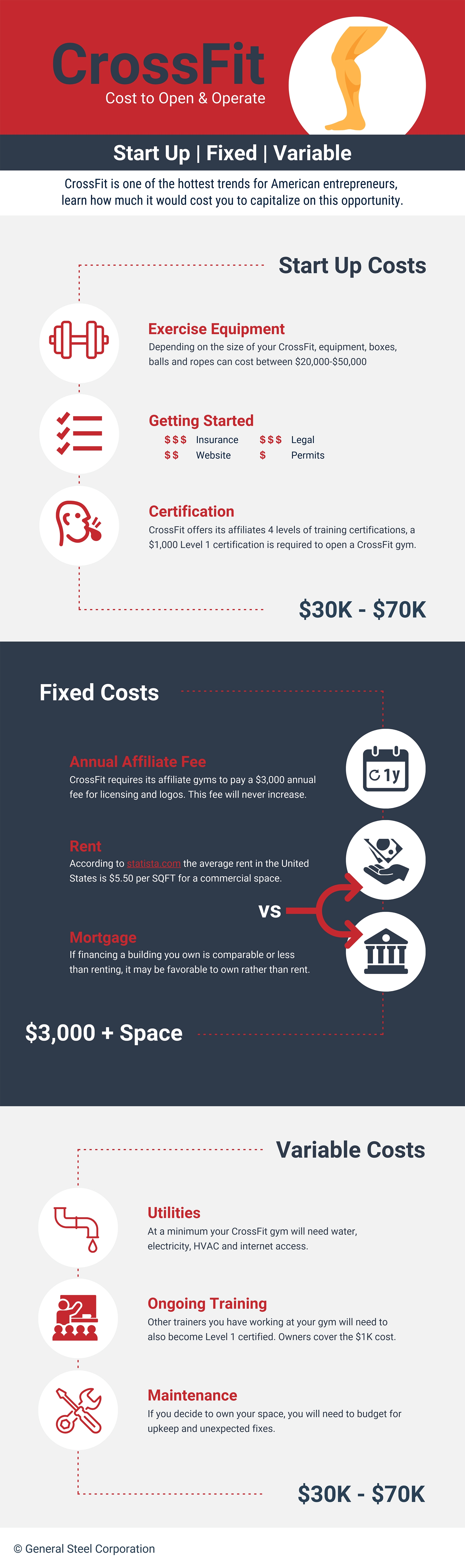
Image Source: gensteel.com
CrossFit Gym Startup: How Much Does It Cost To Open A CrossFit Gym?
Opening a CrossFit gym can be a rewarding venture, but it requires significant financial investment. The total CrossFit gym startup costs can range from $50,000 to over $200,000, depending on various factors like location, size, and the quality of equipment.
Deciphering the Financial Blueprint for Your CrossFit Box
Launching a CrossFit gym is more than just acquiring a space and some weights; it’s about building a community and a brand. To succeed, you need a clear financial plan that accounts for every potential expense. This guide breaks down the core components of CrossFit gym startup costs, helping you budget effectively and avoid common pitfalls.
Essential Investments: What You’ll Need to Buy
CrossFit Gym Equipment Costs: The Heartbeat of Your Box
The most significant chunk of your initial investment will likely go towards CrossFit gym equipment costs. Quality equipment is crucial for safety, performance, and member satisfaction. Think of it as an investment in your gym’s reputation.
Here’s a breakdown of typical equipment needs:
- Barbells and Weight Plates: You’ll need a variety of barbells (Olympic, powerlifting) and a substantial collection of weight plates (bumper plates are standard for CrossFit). Expect to spend anywhere from $5,000 to $20,000 or more, depending on the quantity and brands.
- Kettlebells: A good selection of kettlebells in various weights is essential. Budget around $2,000 to $8,000 for a decent range.
- Dumbbells: Similar to kettlebells, you’ll need a range of dumbbell weights. This can cost between $3,000 and $10,000.
- Rigs and Racks: These are vital for pull-ups, squats, and presses. Squat racks and pull-up rigs can be a significant expense, ranging from $5,000 to $25,000 or more for multiple stations and specialized setups.
- Rowing Machines: Concept2 rowers are the industry standard. A few of these will set you back around $1,000 to $2,000 each, so factor in $5,000 to $15,000 for a good fleet.
- Assault Bikes/Air Bikes: These are popular for conditioning. Plan for $1,000 to $1,500 per bike.
- Medicine Balls and Slam Balls: Essential for functional movements. A set can range from $500 to $2,000.
- Plyo Boxes: For jump training. Budget $500 to $1,500 for a variety of heights.
- Jump Ropes: Relatively inexpensive but necessary for everyone. $200 to $500 should suffice.
- Rig Accessories: Pull-up bars, dip stations, and other attachments can add to the cost, potentially another $1,000 to $5,000.
- Flooring: Specialty gym flooring, like rubber mats, is a must. This can range from $5,000 to $20,000 depending on the size of your space and the quality of the flooring.
Table: Estimated CrossFit Gym Equipment Costs
| Equipment Category | Estimated Cost Range | Notes |
|---|---|---|
| Barbells & Weight Plates | $5,000 – $20,000+ | Bumper plates are essential. |
| Kettlebells | $2,000 – $8,000 | Variety of weights needed. |
| Dumbbells | $3,000 – $10,000 | Wide range of weights is crucial. |
| Rigs & Racks | $5,000 – $25,000+ | Multiple stations and specialized setups. |
| Rowing Machines | $5,000 – $15,000 | Concept2 rowers are the standard. |
| Assault Bikes/Air Bikes | $1,000 – $1,500/each | Consider 4-6 for a decent class size. |
| Medicine Balls & Slam Balls | $500 – $2,000 | For functional movements. |
| Plyo Boxes | $500 – $1,500 | Variety of heights for different workouts. |
| Jump Ropes | $200 – $500 | Essential for conditioning. |
| Rig Accessories | $1,000 – $5,000 | Attachments for rigs and racks. |
| Flooring | $5,000 – $20,000 | Rubber flooring for safety and durability. |
| Total Equipment Estimate | $28,200 – $110,000+ | This is a significant initial outlay. |
Tip: Consider buying some equipment used or in bulk from reputable suppliers to save money.
CrossFit Affiliate Fees: The Price of the Brand
To legally operate as a CrossFit affiliate, you must pay annual CrossFit affiliate fees. This fee grants you the right to use the CrossFit name and methodology. As of recent information, the standard annual CrossFit affiliate fee is around $1,000. However, it’s crucial to check the official CrossFit website for the most current pricing and any potential tier structures or discounts. This fee is recurring and needs to be factored into your ongoing CrossFit gym operational costs.
Location, Location, Location: CrossFit Gym Rent and Build-Out
The cost of securing a physical space can vary dramatically based on your chosen location. CrossFit gym rent is a major expense.
- Leasehold Improvements/Build-Out: This includes renovations to make the space suitable for a gym. Think about:
- Flooring installation
- Painting and decor
- Lighting
- Restroom facilities
- Possibly office space or a small retail area.
- This can easily add $10,000 to $50,000 or more, depending on the condition of the space and the extent of renovations.
- Security Deposit and First Month’s Rent: Most landlords require a security deposit (often one to two months’ rent) and the first month’s rent upfront. If your rent is $5,000 per month, this initial outlay could be $10,000.
- Monthly Rent: Expect to pay anywhere from $2,000 to $10,000+ per month for your gym space. The size of the space (aim for at least 2,000-3,000 sq ft) and the desirability of the location will heavily influence this cost.
Table: Estimated Location-Related Costs
| Expense Category | Estimated Cost Range | Notes |
|---|---|---|
| Security Deposit (1-2 months) | $2,000 – $20,000 | Based on monthly rent. |
| First Month’s Rent | $2,000 – $10,000 | Upfront payment. |
| Leasehold Improvements | $10,000 – $50,000+ | Renovations, flooring, paint, etc. |
| Total Location Estimate | $14,000 – $80,000+ | Highly dependent on location and space condition. |
Setting Up Shop: Essential Business Overheads
Beyond equipment and rent, several other foundational costs are necessary for your CrossFit gym startup costs.
- Business Licensing and Permits: You’ll need to secure various licenses and permits to operate legally. This can include business licenses, occupancy permits, and potentially health permits. Costs vary by municipality but budget $500 to $2,000.
- CrossFit Gym Insurance: This is non-negotiable. You’ll need general liability insurance, professional liability insurance, and potentially property insurance. Premiums can range from $2,000 to $6,000 annually.
- Website and Online Presence: A professional website, social media setup, and potentially a booking system are essential. Expect $500 to $3,000 for initial setup, plus ongoing costs for hosting and maintenance.
- Point of Sale (POS) System and Software: For managing memberships, payments, and scheduling. Budget $500 to $2,000 for hardware and software.
- Initial Inventory: If you plan to sell merchandise (apparel, supplements), you’ll need initial inventory. This could be $1,000 to $5,000.
- Signage: Professional signage for your gym exterior and interior is crucial for branding and visibility. This can range from $1,000 to $5,000.
Table: Essential Business Overheads
| Expense Category | Estimated Cost Range | Notes |
|---|---|---|
| Business Licensing & Permits | $500 – $2,000 | Varies by location and required permits. |
| CrossFit Gym Insurance | $2,000 – $6,000 | Annual premiums for essential coverage. |
| Website & Online Presence | $500 – $3,000 | Initial setup for website, social media, booking. |
| POS System & Software | $500 – $2,000 | For membership management and payments. |
| Initial Inventory (Merch) | $1,000 – $5,000 | If you plan to sell retail items. |
| Signage | $1,000 – $5,000 | Exterior and interior branding. |
| Total Overheads Estimate | $5,500 – $23,000 | Essential for legal operation and brand building. |
The Human Element: CrossFit Gym Staffing Costs
As your gym grows, you’ll need staff. CrossFit gym staffing costs can be a significant ongoing expense.
- Coaches: You’ll need qualified CrossFit Level 1 (or higher) certified coaches. Initially, you might be the primary coach, but as you scale, you’ll need to hire. Consider hourly wages or a per-class rate. A single coach might earn $20-$40 per hour.
- Front Desk Staff/Community Manager: For managing memberships, customer service, and keeping the gym tidy. This role is crucial for member retention. An hourly wage might be $15-$25.
- Owner’s Salary: Don’t forget to factor in your own compensation, even if it’s minimal at first.
Example Staffing Scenario (Initial):
- You (Owner/Head Coach): $0 (initially, reinvesting profits)
- Part-time Coach: 20 hours/week @ $25/hour = $500/week = $2,000/month
- Part-time Front Desk: 15 hours/week @ $18/hour = $270/week = $1,080/month
- Total Initial Staffing Cost: $3,080/month
This translates to roughly $36,960 annually. As your gym grows and offers more classes, these costs will increase.
Getting the Word Out: CrossFit Gym Marketing Budget
A solid marketing strategy is vital for attracting members. Your CrossFit gym marketing budget should cover both initial launch efforts and ongoing promotion.
- Grand Opening Event: This is a crucial first impression. Budget $500 to $3,000 for food, drinks, giveaways, and local advertising.
- Online Advertising: Social media ads (Facebook, Instagram) and Google Ads can be very effective. Allocate $200 to $1,000 per month initially.
- Local Partnerships: Collaborating with local businesses can expand your reach. This might involve cross-promotions or event sponsorships.
- Content Creation: High-quality photos and videos of your gym and classes are essential for social media.
- Promotional Materials: Flyers, business cards, and local print ads.
Table: Sample Monthly Marketing Budget
| Marketing Activity | Estimated Monthly Cost | Notes |
|---|---|---|
| Social Media Ads | $200 – $1,000 | Targeted campaigns to attract new members. |
| Google Ads | $100 – $500 | For local search visibility. |
| Content Creation | $100 – $300 | Professional photos/videos for social media. |
| Local Partnerships | Varies | Could be in-kind or small sponsorships. |
| Email Marketing Tools | $20 – $50 | For member communication and promotions. |
| Total Monthly Budget | $420 – $1,850 | Adjust based on growth and results. |
Operational Realities: Ongoing CrossFit Gym Operational Costs
Beyond startup, consistent CrossFit gym operational costs need to be managed. These are the expenses you’ll incur every month to keep the doors open.
- Rent: As discussed, this is a major recurring cost.
- Utilities: Electricity, water, gas, internet, and waste disposal. Budget $500 to $2,000 per month.
- Salaries and Wages: For coaches and staff.
- Insurance Premiums: Paid annually or monthly.
- Marketing and Advertising: Ongoing efforts to attract and retain members.
- Software Subscriptions: For gym management, accounting, etc.
- Equipment Maintenance and Repair: Things break! Set aside a small amount monthly for repairs or replacements.
- Cleaning and Supplies: Maintaining a clean gym is crucial.
- Music Licensing: If you play music in your gym, you’ll need to pay licensing fees (e.g., ASCAP, BMI).
- Continuing Education and Certifications: For coaches and yourself.
Table: Estimated Monthly Operational Costs (Example)
| Operational Expense | Estimated Monthly Cost | Notes |
|---|---|---|
| Rent | $2,000 – $10,000 | Varies greatly by location and size. |
| Utilities | $500 – $2,000 | Electricity, water, internet, etc. |
| Staffing | $3,000 – $10,000+ | Depends on the number and pay of coaches and staff. |
| Insurance | $167 – $500 | Annual premium divided by 12. |
| Marketing | $420 – $1,850 | Ongoing efforts. |
| Software | $100 – $300 | Gym management, accounting. |
| Maintenance | $100 – $500 | Budget for repairs and upkeep. |
| Cleaning Supplies | $50 – $200 | Maintaining hygiene. |
| Music Licensing | $50 – $150 | If playing music. |
| Total Monthly Ops. | $6,387 – $25,500+ | These are ongoing expenses that must be covered by revenue. |
Charting Your Course: Total Estimated Startup Costs
Let’s bring it all together to get a realistic picture of your CrossFit gym startup costs. This is a broad range, and your specific situation will dictate where you fall.
Table: Summary of CrossFit Gym Startup Costs
| Cost Category | Low Estimate | High Estimate | Notes |
|---|---|---|---|
| CrossFit Gym Equipment Costs | $28,200 | $110,000+ | Quality equipment is key. |
| CrossFit Affiliate Fees | $1,000 | $1,000 | Annual fee, consider first year upfront. |
| Location (Deposit + Build-out) | $14,000 | $80,000+ | Heavily dependent on rent and renovation needs. |
| Essential Business Overheads | $5,500 | $23,000 | Licensing, insurance, website, POS, signage. |
| Initial Working Capital | $10,000 | $30,000 | To cover initial operating expenses before profitability. |
| Total Estimated Startup | $58,700 | $244,000+ | This range highlights the significant capital required. |
Important Considerations:
- Working Capital: It’s crucial to have at least 3-6 months of operating expenses in reserve to cover costs until the gym becomes consistently profitable. This could add another $20,000 to $60,000+.
- Contingency Fund: Always add a 10-15% buffer for unexpected expenses.
Crafting Your Revenue Stream: CrossFit Gym Membership Pricing
The CrossFit gym membership pricing strategy will directly impact your ability to cover these startup and ongoing costs. Pricing needs to reflect the value you provide, the local market, and your overhead.
- Unlimited Monthly Membership: This is the most common model, offering members access to all classes. Prices can range from $120 to $250+ per month, depending on the city and the gym’s reputation.
- Punch Cards/Class Packs: For less frequent attendees, offer options like 10-class passes for $150-$250.
- Drop-in Rates: For visitors or those trying out the gym, a drop-in rate of $20-$35 per class is standard.
- Personal Training: Offer one-on-one or small group training for additional revenue.
- Specialty Programs: Olympic lifting, gymnastics, or nutrition coaching can command premium pricing.
Pricing Strategy Factors:
- Competitor Analysis: Research what other gyms in your area charge.
- Target Audience: Who are you trying to attract?
- Value Proposition: What makes your gym unique? (Coaching quality, community, amenities)
- Your Costs: Ensure your pricing covers all operational expenses and allows for profit.
Example Pricing Structure:
- Unlimited Monthly Membership: $180
- 10-Class Pass: $200
- Drop-in Rate: $25
- On-Ramp Program (Introductory): $150 for 2 weeks
To break even, you’ll need to calculate how many members at your chosen price point are needed to cover your monthly operational costs. For example, if your monthly operational costs are $15,000 and your average membership price is $180, you’d need approximately 84 members just to cover expenses.
Frequently Asked Questions (FAQ)
Q1: Can I open a CrossFit gym with a smaller budget?
While the high end of the range is considerable, it is possible to open a CrossFit gym with a smaller budget by being strategic. This might involve:
- Starting with a smaller space.
- Purchasing more used equipment.
- Focusing on essential equipment first and expanding later.
- Leveraging your own coaching skills extensively.
- Offering fewer classes initially.
- Seeking out a location with lower rent.
However, cutting too many corners, especially on safety-critical equipment and insurance, can be detrimental to your gym’s long-term success and reputation.
Q2: How long does it take to become profitable?
Profitability timelines vary greatly. Many gyms take 1-3 years to become consistently profitable. Factors influencing this include your initial marketing efforts, member retention rates, effective cost management, and your pricing strategy. Building a strong community and reputation takes time.
Q3: What are the most common mistakes new gym owners make?
- Underestimating startup costs and not having enough working capital.
- Poor financial planning and management.
- Not clearly defining their target audience.
- Underestimating the importance of marketing and community building.
- Hiring the wrong staff or not hiring soon enough.
- Ignoring the need for proper insurance.
Q4: Do I need a CrossFit Level 1 certification?
Yes, if you plan to operate as a CrossFit affiliate and use the CrossFit methodology, you or your head coach must hold a current CrossFit Level 1 Trainer Certificate. CrossFit’s affiliation agreement requires this.
Q5: Is CrossFit a profitable business model?
CrossFit can be a profitable business model, but it requires a strong understanding of business operations, effective marketing, and a commitment to building a loyal community. Success is not guaranteed, and it demands hard work, dedication, and smart financial management.
Q6: What is CrossFit gym insurance?
CrossFit gym insurance is a type of business insurance specifically designed for fitness facilities that offer CrossFit programming. It typically includes general liability (to cover slips, falls, and injuries on the premises), professional liability (to cover injuries resulting from coaching errors or improper instruction), and property insurance (to cover your gym’s assets). It is essential for protecting your business from potential lawsuits.
Q7: How do I set my CrossFit gym membership pricing?
Setting CrossFit gym membership pricing involves a thorough analysis of your operational costs, the local market, competitor pricing, and the perceived value of your services. Start by calculating your break-even point. Then, research what other gyms in your area charge for similar services. Consider tiered pricing options (e.g., unlimited, limited classes) and special packages. Ultimately, your pricing should reflect the quality of coaching, the facility, and the community you offer, ensuring it covers your expenses and allows for profit.
By thoroughly researching and planning for each of these cost categories, you can approach your CrossFit gym startup with confidence and a solid financial foundation.