What is the knack exercise? The knack exercise is a simple technique where you quickly tighten your pelvic floor muscles right before you cough, sneeze, lift, or do anything else that puts sudden pressure on your belly. This quick squeeze helps prevent little leaks of urine that can happen at these times.
Many people deal with little leaks when they cough, sneeze, or lift heavy things. This is very common, especially for women. It has a name: stress incontinence. It means your body lets out a small amount of pee when there is sudden ‘stress’ or pressure inside your belly. Think of it like pushing down on a slightly open water balloon – some water might squirt out.
This pressure comes from things like coughing hard, sneezing fast, laughing a lot, jumping, or picking up something heavy. When this happens, your pelvic floor muscles are supposed to hold everything in tight. But sometimes, these muscles are weak, or they just aren’t ready for the sudden push. That’s where the knack comes in. It’s a way to get your muscles ready right before the push happens.
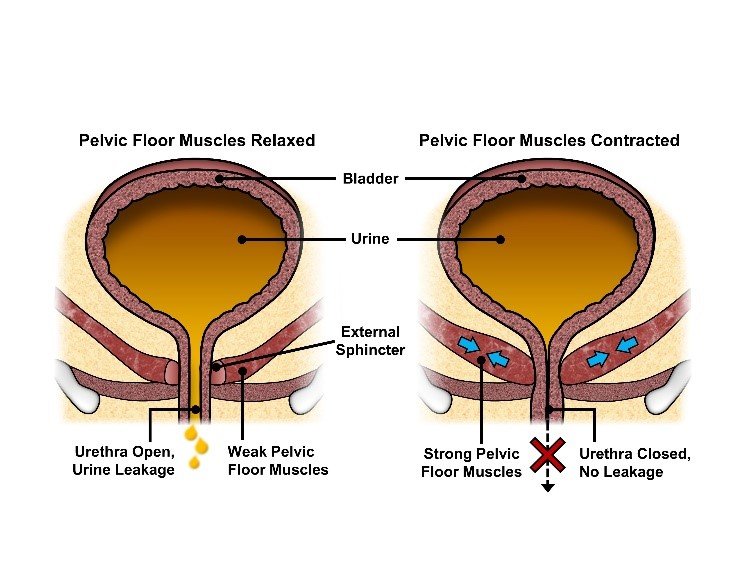
Image Source: vibrance.com.my
Grasping Stress Incontinence
Stress incontinence is not about having a full bladder or not getting to the bathroom in time. It is about a leak that happens because of a sudden action.
Think about your belly. It is like a balloon. When you cough or sneeze, you squeeze this balloon. This squeeze pushes down on your bladder and the tubes that hold pee in.
Your pelvic floor muscles are like a strong floor under this balloon. They are a group of muscles that stretch from your tailbone to your pubic bone. They support your bladder, bowels, and for women, the uterus.
When these muscles are strong and healthy, they can handle the sudden push from a cough or sneeze. They stay tight and keep the pee in.
But if the muscles are weak, or if the sudden push is too strong, they might not hold. This leads to a small leak. This is stress incontinence.
It is called ‘stress’ incontinence because the leak happens when there is physical stress or pressure on the bladder, not because you are feeling stressed emotionally.
Things that can make stress incontinence more likely:
* Having babies: Pregnancy and childbirth can stretch and weaken these muscles.
* Getting older: Muscles naturally lose some strength over time.
* Being overweight: Extra weight puts more pressure on the pelvic floor.
* Long-term coughing: This can happen if you smoke or have lung problems. The constant coughing puts stress on the muscles.
* Certain surgeries: Operations in the pelvic area can sometimes affect the muscles or nerves.
Living with stress incontinence can be upsetting. It can make you worry about laughing in public, exercising, or even just catching a cold. But there are ways to help manage it and make it better. The knack exercise is one simple but powerful tool you can use right away.
Fathoming the Pelvic Floor Muscles
Let’s talk more about these important pelvic floor muscles. Imagine them as a strong hammock or a muscular sling at the bottom of your pelvis.
These muscles do many key jobs:
* They hold up your organs: bladder, bowel, and uterus (in women).
* They help control when you pee and poop. They act like valves, opening and closing.
* They play a role in sexual feeling.
* They help support your back and core.
Finding these muscles is the first step to working with them. How do you find them?
Imagine you are trying not to pass gas. The muscles you squeeze are part of your pelvic floor.
Imagine you are trying to stop the flow of pee mid-stream. The muscles you squeeze are your pelvic floor muscles. (But don’t actually do this regularly, as stopping and starting pee can be bad for your bladder.)
The feeling is a squeeze and a lift. It feels like pulling everything up and in. You should not be squeezing your bottom cheeks, legs, or belly muscles. It’s a deeper squeeze inside.
Learning to feel and control these muscles takes practice for some people. But it is worth it. Strong pelvic floor muscles are key to stopping leaks.
Deciphering Kegel Exercises
You might have heard about Kegel exercises. These are also for the pelvic floor muscles. Kegel exercises are different from the knack, but they work together.
Kegel exercises are like lifting weights for your pelvic floor. You do them regularly, usually every day, to make the muscles stronger over time.
To do a basic Kegel exercise:
1. Find your pelvic floor muscles (squeeze like you’re stopping pee or gas).
2. Squeeze these muscles and hold tight.
3. Hold for a few seconds (start with 3-5 seconds).
4. Relax the muscles fully for the same amount of time.
5. Repeat this squeeze-and-relax many times (aim for 10-15 repeats).
6. Do a set of these holds and repeats three times a day.
Kegels build strength and endurance. Stronger muscles are better at supporting your bladder and resisting pressure. Doing Kegels regularly is a great way to improve your pelvic floor health over weeks and months.
Contrasting the Knack and Kegels
So, how is the knack different from Kegel exercises?
Think of it this way:
* Kegels: This is training your muscles to be strong. It’s like going to the gym to lift weights so you can lift heavy things in the future. You do Kegels over time to build lasting strength.
* The Knack: This is using your muscle strength at the exact moment you need it. It’s like knowing how to lift a heavy box without hurting your back, using the right muscles at the right time. You do the knack just before you cough or sneeze.
Kegels work on long-term strength. The knack works on immediate control and protection.
You need both! Doing regular Kegel exercises makes your pelvic floor muscles stronger. This gives you more power to use when you do the knack. The knack is the smart way to use that strength at the right time to stop leaks.
Doing the knack exercise without doing Kegels regularly might help a little, but your muscles might not be strong enough to handle the pressure well. Doing Kegels without using the knack means your strong muscles might not be ready and engaged at the split second pressure hits.
So, for the best results in preventing leaks from coughing sneezing lifting, you should probably do both: regular Kegels to build strength and use the knack technique for instant protection during specific actions.
Interpreting How the Knack Works
The knack exercise uses a simple idea: pelvic floor bracing. It’s like creating a strong shield or a quick clamp just in time.
When you brace your pelvic floor muscles right before a cough or sneeze:
1. You quickly tighten the muscles.
2. This closes off the opening from the bladder.
3. It also helps support the bladder and the tubes.
4. When the sudden pressure from the cough hits, the muscles are already ready and holding firm.
5. They can resist the pressure much better than if they were relaxed.
6. This stops or greatly reduces the chance of a little leak.
It’s all about timing. The key phrase is “squeeze before you sneeze“. Or squeeze before you cough. Or squeeze before you lift. You have to do the squeeze just before the pressure starts.
If you squeeze during the cough or sneeze, it’s often too late. The pressure has already built up and pushed down. The muscles need to be ready and tight before that sudden push happens.
Think about catching a ball. You get your hands ready before the ball hits. The knack is getting your pelvic floor muscles ready before the pressure hits.
This technique is quite powerful because it uses your muscles in a very active and timely way. It doesn’t rely on long-term strength alone, but on your ability to use that strength instantly when needed.
Learning How to Do the Knack Exercise
Doing the knack is simple, but it takes a little practice to get the timing right.
Here are the steps:
Step 1: Find Your Pelvic Floor Muscles (Review)
Before you do the knack, make sure you know which muscles to squeeze.
* Sit or lie down comfortably.
* Try to pull the muscles around your back passage (anus) up and in, as if you are trying to stop passing gas.
* At the same time, try to pull the muscles around your vagina (for women) or the base of your penis (for men) up and in, as if you are trying to stop the flow of urine.
* The feeling is a squeeze and a lift inside your pelvis.
* Your bottom cheeks, legs, and belly should stay relaxed. If they are tightening, you are not squeezing the right muscles.
* Practice finding these muscles until you are sure you can squeeze just them.
Step 2: Get Ready for the Action
Identify the action that causes you to leak. Is it coughing? Sneezing? Lifting? Jumping?
The knack works best for actions that you can feel coming, even just a moment before. You can usually feel a cough or sneeze building up. You know you are about to lift something.
Step 3: The Quick Squeeze (The Knack!)
- As you feel the cough, sneeze, or lift starting, but before it fully happens, quickly and strongly squeeze your pelvic floor muscles.
- Make it a sharp, fast squeeze. It’s not a long hold like a regular Kegel.
- Squeeze hard and fast.
Step 4: Hold Through the Action
- Keep the squeeze strong while you are coughing, sneezing, or lifting.
- The muscle is working hard to counteract the pressure pushing down from above.
Step 5: Relax After the Action
- Once the cough is over, the sneeze has happened, or the lift is complete, relax your pelvic floor muscles.
That’s it! It’s a quick, sharp squeeze and hold right when you need it.
Let’s break down the timing even more simply:
- You feel a tickle in your throat (a cough is coming!).
- Right now, quickly squeeze your pelvic floor muscles tight.
- Now you cough (keep squeezing!).
-
Cough is done, relax your muscles.
-
You feel the nose tickle (a sneeze is coming!).
- Right now, quickly squeeze your pelvic floor muscles tight.
- Now you sneeze (keep squeezing!).
-
Sneeze is done, relax your muscles.
-
You bend down to lift a heavy bag.
- Right before you stand up and lift the bag, quickly squeeze your pelvic floor muscles tight.
- Now lift the bag (keep squeezing!).
- Bag is lifted, relax your muscles.
This technique is sometimes called pelvic floor bracing. You are creating a brace or support before the impact of the pressure hits.
Where and When to Use the Knack
You can use the knack any time you expect pressure on your belly that might cause a leak.
Common times to use the knack:
* When you feel a cough coming on (especially important if you have a cold or allergies).
* When you feel a sneeze starting.
* Just before you lift anything heavy (groceries, a child, weights at the gym).
* Before you stand up quickly from sitting or lying down (for some people, this causes a small leak).
* Before you jump or land from a jump.
* Before doing exercises that involve bouncing or impact.
* Before laughing hard.
* Before pushing during a bowel movement (though ideally, you shouldn’t strain here, the knack can help support the area).
You can practice the knack at home first. Try coughing on purpose while sitting or standing. Each time, try to do the quick squeeze just before you cough. See if it makes a difference.
Practice sneezing? It’s hard to make yourself sneeze! But you can be ready when you feel a real one coming.
Practice lifting? Lift a small weight or a heavy book. Do the knack squeeze just before you lift.
The more you practice the timing, the more natural it will become. You want it to become a habit.
The Power of Engaging Pelvic Floor Muscles
The knack exercise highlights the power of engaging pelvic floor muscles actively. It shows that it’s not just about muscle strength (though that helps!), but about muscle control and timing.
Think of strong arms. They are good for lifting weights. But if you try to lift a heavy box with your arms loose and not ready, you might drop it or hurt yourself. If you brace your arms, tighten your grip, and use the right muscles in your back and legs as you lift, you can lift safely.
The knack is like bracing for your pelvic floor. You tell the muscles, “Get ready! Pressure is coming!” and they respond by tightening up to protect you.
This active engaging pelvic floor technique is what makes the knack different from just having generally strong muscles. It’s using the strength exactly when needed.
It’s a bit like a reflex, but one you consciously create. With practice, you can make the squeeze happen faster and more automatically when you feel a cough or sneeze starting.
Boosting Confidence and Preventing Leaks
One of the biggest benefits of using the knack exercise is how it helps with preventing leaks. For many people, even a small leak can cause worry and change how they live their lives.
If you are worried about leaking when you cough or sneeze, you might avoid certain activities:
* Going out when you have a cold.
* Exercising, especially running or jumping.
* Playing with children or grandchildren.
* Laughing freely with friends.
By using the knack, you gain a tool that can significantly reduce or stop those leaks. This can lead to a big boost in confidence.
Knowing you have a way to help control leaks when pressure hits means you can worry less. You might feel more comfortable:
* Going out, even with a slight cough.
* Joining that exercise class.
* Playing actively.
* Enjoying social situations without fear of embarrassment.
The knack exercise is not a magic cure for all types of urinary incontinence, but it is highly effective for stress incontinence, which is the type linked to coughing sneezing lifting.
It gives you back some control over your body and helps you live more freely without the constant worry of unexpected leaks.
Common Challenges and How to Fix Them
Doing the knack sounds simple, but people sometimes have trouble with it.
Here are some common challenges and tips:
Challenge 1: Not Finding the Right Muscles.
* Fix: Go back to basics. Practice squeezing the muscles you use to stop pee or gas. Do it when sitting, standing, and lying down. Use a mirror to check that your outer muscles (bottom cheeks, legs) are not moving. A physical therapist specializing in pelvic health can be a great help here. They can check if you are squeezing the right muscles.
Challenge 2: Squeezing Too Late.
* Fix: This is the most common issue. The squeeze must happen before the pressure hits. Practice anticipating the cough or sneeze. If you have a cough coming, feel the tickle in your throat and squeeze immediately. Don’t wait for the cough itself. For lifting, squeeze as you start to bend or just as you are about to stand up with the weight. Try practicing with a fake cough first. Say “hup” like you are coughing, and squeeze your pelvic floor just before you say “hup”.
Challenge 3: Not Squeezing Hard Enough.
* Fix: The knack squeeze needs to be quick and strong. It’s a maximal contraction for a short time. Make sure you are really pulling those muscles up and in with power for that brief moment.
Challenge 4: Forgetting to Do It.
* Fix: This takes practice and making it a habit. At first, you might forget. That’s okay. Just try again the next time. Try linking it to the trigger. For example, every time you feel the start of a sneeze, tell yourself, “Squeeze!” Putting a small note on your bathroom mirror might help you remember to practice Kegels and the knack timing.
Challenge 5: It Doesn’t Stop All Leaks.
* Fix: The knack is very effective for stress incontinence. However, leaks can happen for other reasons (like urge incontinence, where you have a sudden strong need to pee). The knack won’t help much with that. Also, if stress incontinence is severe, the knack might reduce the leak but not stop it completely. This is where combining the knack with regular, consistent Kegel exercises to build greater muscle strength is important. Seeing a doctor or a pelvic health physical therapist is also a good idea if leaks are still a big problem. They can check for other causes and give you personalized help.
Remember, like any new skill, the knack takes practice. Be patient with yourself. The more you try it, the better you will get at the timing and the squeeze.
Combining the Knack with Other Strategies
The knack exercise is a fantastic tool for instant leak prevention, especially for stress incontinence. But it works even better as part of a larger plan for pelvic health.
Think of it like building a strong house. The knack is like putting extra supports in place just before a storm hits. Kegels are like making the foundation and walls strong over time. Both are needed for the strongest house.
Here are other things that work well with the knack:
- Regular Kegel Exercises: As discussed, doing daily Kegels builds the underlying muscle strength that makes your knack squeeze more powerful. Aim for 3 sets of 10-15 squeezes and relaxations each day.
- Maintaining a Healthy Weight: Extra body weight puts more pressure on your pelvic floor. Losing even a small amount of weight can reduce this pressure and help with leaks.
- Avoiding Constipation: Straining during bowel movements puts major downward pressure on the pelvic floor. Eating fiber-rich foods and drinking enough water helps keep things moving smoothly.
- Managing Chronic Cough: If you have a cough that doesn’t go away (perhaps due to smoking, allergies, or asthma), getting treatment for the cough can reduce the number of times you put stress on your pelvic floor. This is important for long-term pelvic health.
- Proper Lifting Techniques: Even with the knack, lifting heavy objects can put a lot of strain on your body. Learn to lift with your legs, keep the object close to you, and avoid twisting. Always use the knack squeeze before the lift.
- Bladder Habits: While the knack is for stress incontinence, having good general bladder habits helps overall. Don’t go to the bathroom “just in case” all the time, as this can train your bladder to hold less. Go when you feel the need, but learn to wait a few minutes if possible to increase bladder capacity.
- Seeing a Healthcare Professional: If leaks are bothersome, talk to your doctor. They can rule out other causes and suggest treatments. A pelvic health physical therapist is specially trained to help with pelvic floor problems. They can teach you how to find and strengthen your muscles correctly, and fine-tune your knack technique.
Using the knack along with these other healthy habits provides the best chance for significantly preventing leaks and improving your quality of life.
Making the Knack a Habit
For the knack exercise to work for you, you need to remember to do it when it counts. This means making it a habit.
Here are some tips to help the knack become second nature:
- Practice, Practice, Practice: Spend a few minutes each day practicing the quick, strong squeeze, even when you don’t need it for a cough or sneeze. Just squeeze and relax. This helps train your muscles and your brain.
- Link It to Triggers: Consciously think about the actions that cause leaks for you. Every time you feel a cough starting, think “Squeeze!” Every time you bend to lift, think “Squeeze!”
- Start with Predictable Actions: It’s easiest to start with actions you can plan for, like lifting. Practice the knack every single time you lift something, even light things, around the house. This builds the habit.
- Visualization: Before you do an activity that might cause a leak, imagine yourself doing the quick squeeze just before. Picture your muscles tightening and holding firm.
- Gentle Reminders: If you live with someone supportive, you could ask them to gently remind you (“Don’t forget your knack!”) if they hear you about to cough or see you about to lift.
- Celebrate Small Wins: Notice when you successfully used the knack and it helped prevent a leak. Acknowledge your success. This positive feedback helps you remember to do it next time.
- Be Patient: Building a new habit takes time. You won’t remember every single time at first. Don’t get discouraged. Just keep trying.
Over time, with enough practice, the knack can become almost automatic. You will feel a cough coming and your pelvic floor muscles will engage without you having to think hard about it. This is the goal – instant, protective pelvic floor bracing whenever you need it for coughing sneezing lifting.
Comprehensive Overview of the Knack
Let’s put it all together. The knack is a vital tool for managing stress incontinence.
Here’s a table summarizing the key points:
| Feature | Description | Benefit for Leaks |
|---|---|---|
| What it is | A quick, strong squeeze of the pelvic floor muscles. | Helps close the outlet and support the bladder. |
| When to do it | Just before coughing, sneezing, lifting, jumping, or other strenuous action. | Creates instant bracing against sudden pressure. |
| How to do it | Identify pelvic floor muscles, then squeeze hard and fast right before impact. | Engages muscles actively when most needed. |
| Timing is Key | Must squeeze before the pressure hits. | Muscles are ready to resist the downward push. |
| Differs from Kegels | An immediate reaction technique, not a long-hold strengthening exercise. | Provides protection at the moment of stress. |
| Best Use | Combined with regular Kegel exercises for maximum effectiveness. | Builds muscle strength (Kegels) AND teaches timed use (Knack). |
| Main Benefit | Preventing leaks associated with coughing sneezing lifting. | Reduces or eliminates bothersome leaks. |
| Also Known As | Pelvic floor bracing, squeeze before you sneeze. | Different names for the same protective concept. |
The knack exercise is a simple yet powerful technique. It puts you in control during those moments when you feel vulnerable to leaks. By mastering the quick squeeze and the perfect timing, you can significantly improve your daily life and gain confidence back.
It’s important to remember that while the knack helps manage leaks from stress incontinence, it doesn’t fix the underlying weakness. That’s why doing regular Kegel exercises to build strength is so crucial. The knack uses the strength you build with Kegels.
If you are new to Kegels or unsure if you are doing them right, or if your leaks are still causing significant problems despite using the knack and doing Kegels, please talk to a doctor or see a pelvic health physical therapist. They can provide expert guidance tailored to your specific needs.
But for those moments when you feel a cough or sneeze coming, or you need to lift something, the knack is your go-to move. A quick, strong engaging pelvic floor squeeze right before the action – that is the knack. It is your secret weapon for preventing leaks and living more freely.
Practice it today. Feel the difference it can make when you squeeze before you sneeze.
Frequently Asked Questions (FAQ)
Here are some common questions about the knack exercise.
h4 Why does the knack exercise work for preventing leaks?
The knack works by quickly tightening your pelvic floor muscles right before you cough, sneeze, or lift. This quick squeeze helps to support your bladder and close the opening that lets pee out. When pressure from the cough or lift pushes down, the muscles are already tight and can resist that pressure better, stopping or reducing leaks. It’s like bracing yourself for an impact.
h4 Is the knack exercise the same as Kegel exercises?
No, they are different but work well together. Kegel exercises are done regularly (usually daily) to build muscle strength and endurance over time. The knack exercise is a quick, strong squeeze done at one specific moment, just before an activity like coughing or sneezing, to prevent a leak right then. Kegels build the strength, the knack uses the strength at the right time.
h4 How quickly can I expect the knack exercise to help?
You can feel the effects of the knack exercise right away, the very first time you use it correctly. When you time the squeeze correctly – before the cough or sneeze – you should notice a difference in leaks immediately for that specific event. It doesn’t require weeks of practice to see a benefit, unlike Kegels which take time to build strength. However, practicing the knack helps you get better at the timing and makes it a habit.
h4 Can men do the knack exercise too?
Yes, absolutely. Men also have pelvic floor muscles, and they can also experience stress incontinence, often after prostate surgery. The knack exercise works the same way for men to help preventing leaks during coughing sneezing lifting or other actions that cause pressure. Men find their pelvic floor muscles by trying to stop the flow of urine or prevent passing gas.
h4 What if I forget to do the knack before I cough or sneeze?
If you forget, don’t worry! Just try to remember the next time. Forgetting is normal when you are learning a new habit. The key is to keep practicing and try to link the squeeze to the first feeling you get that a cough or sneeze is coming. The more you practice, the more automatic it will become.
h4 Can the knack exercise cure my urinary incontinence completely?
The knack exercise is very effective for managing and preventing leaks caused by stress incontinence. It may significantly reduce or even stop leaks during activities like coughing sneezing lifting. However, it doesn’t cure the underlying reason for the incontinence, which is often muscle weakness or support issues. For long-term improvement and potential ‘cure’ (or significant reduction), combining the knack with regular Kegel exercises and addressing any other contributing factors (like weight or chronic cough) is usually needed. If you have other types of urinary incontinence, like urge incontinence, the knack won’t be as helpful.
h4 Does the knack exercise help with leaks from laughing?
Yes, laughing hard also puts sudden pressure on your belly and pelvic floor, just like coughing sneezing lifting. If laughing causes you to leak, you can use the knack exercise. Squeeze your pelvic floor muscles quickly and strongly just as you start to laugh hard. Keep the squeeze going while you are laughing. Relax when you stop laughing.
h4 Is it okay to use the knack multiple times a day?
Yes, it is perfectly fine and recommended to use the knack exercise every time you need it. You can use it every time you cough, sneeze, or lift, no matter how many times that is in a day. It is a quick, functional squeeze, not a tiring exercise like doing multiple sets of long Kegel holds.
h4 Can the knack exercise make my pelvic floor muscles stronger?
While the knack uses a strong squeeze, it’s very short. Doing the knack alone is not the best way to build long-term muscle strength. Regular Kegel exercises, where you hold the squeeze for several seconds and repeat many times, are designed for building strength and endurance. The knack helps you use the strength you already have or are building with Kegels.
h4 Where can I get more help if the knack and Kegels are not enough?
If you are still having problems with leaks despite trying the knack and regular Kegel exercises, it’s important to see a healthcare professional. Talk to your doctor, who might suggest other treatments or refer you to a specialist. A pelvic health physical therapist is highly recommended. They are experts in treating pelvic floor problems and can give you a personalized plan, check your muscle technique, and offer other helpful strategies.
Using the knack is a skill you can learn and use right away. Add it to your routine and feel more confident managing leaks!